

Last Friday at a sun-drenched patio in downtown Phoenix, a guest stared at a menu for six minutes before ordering the only word they recognized. It's a common scene. You want to enjoy the craft, but those complex wine names on the list feel like a secret code designed to keep you out. Whether you're at a high-end tasting or just browsing the local shop, it's frustrating to spend $45 on a bottle only to realize you confused a brand name with a grape variety.
We've all felt that slight sting of uncertainty when the server asks for your choice. You deserve to feel as relaxed as a Sedona sunset every time you order a glass. This guide simplifies the label by teaching you the difference between global regions and specific grape varieties, with a special focus on Arizona's unique wine regions, including gems from the Verde Valley, Willcox, and Sonoita AVAs. By the time you finish reading, you'll identify your favorite flavor profiles with ease and walk into any Arizona wine bar with total confidence. Let's explore the stories behind the labels and find your next favorite pour.
Key Takeaways
- Learn to distinguish between labels named after grapes and those named after regions to navigate any wine list with confidence.
- Master the "Big Three" red wine names commonly found in Phoenix, focusing on the body and fruit notes that define their character.
- Identify the best white and rosé styles to keep you cool under the Arizona sun, from bone-dry to delightfully sweet.
- Discover the unique charm of the Verde Valley AVA and what makes Arizona-grown labels a must-sip for local enthusiasts.
- Find out how a SIP Phoenix tour bridges the gap between the label on the bottle and the craft in your glass.
Decoding Wine Names: Varietal vs. Regional Labels
Step into any tasting room, and the labels tell a story. Some speak of the fruit, while others whisper of the soil. Most wine names fall into two distinct buckets: the Varietal or the Regional. Understanding the Classification of wine helps you navigate these stories with ease. It turns a confusing wall of glass into a map of flavors waiting to be discovered. Settle into a comfortable chair and let's break down the language of the bottle.
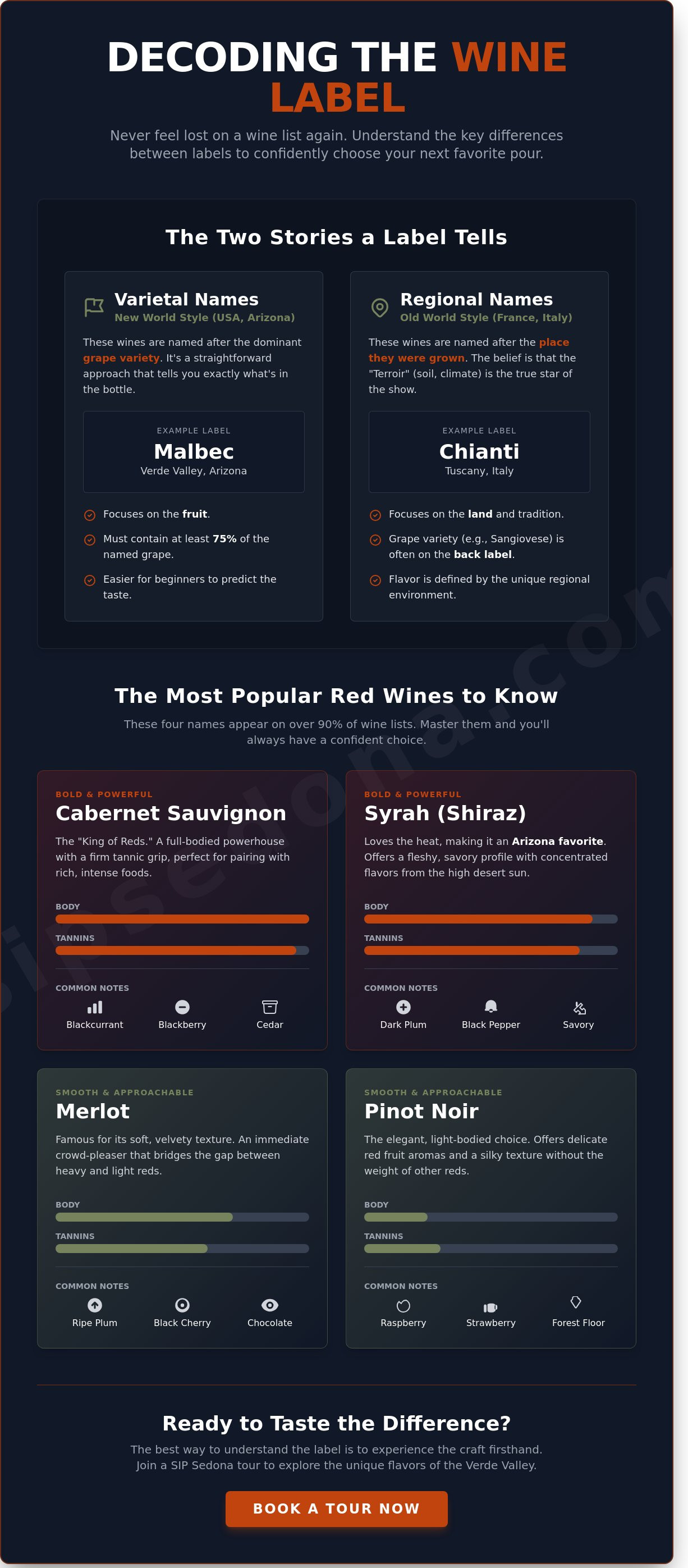
A Varietal wine takes its name from the dominant grape used in the blend. When you order a Cabernet Sauvignon or a crisp Pinot Grigio, you're naming the fruit itself. Regional names point to a specific map coordinate. Champagne, Bordeaux, and Chianti aren't grapes; they're places with long histories and strict traditions. This distinction is the first step in finding a pour that matches your mood.
At the heart of this naming tug-of-war sits "Terroir." This French term encompasses the climate, soil, and terrain of a vineyard. In the high desert of Sedona, the volcanic rock and intense Arizona sun create a specific signature in every craft bottle. The land dictates the flavor. This is why the name of the land often matters as much as the fruit itself. The soil provides the soul, while the grape provides the body.
New World Naming: Focus on the Grape
Wines from the United States, including our local Arizona pours, usually lead with the grape name. It's a straightforward approach. This style makes it easier for beginners to predict the taste before the first sip. If you see Malbec on a label, you know to expect dark fruit and plush tannins. Under federal regulations from the Alcohol and Tobacco Tax and Trade Bureau, a wine must contain at least 75% of a specific grape to carry that varietal name. This consistency makes exploring New World wine names approachable and stress-free.
Old World Naming: Focus on the Land
European traditions favor the land over the vine. French, Italian, and Spanish producers believe the region's unique environment is the true star of the show. You won't see Sangiovese written in big letters on a bottle of Chianti, even though it's the primary grape. Similarly, a Chablis is always made from Chardonnay grapes grown in that specific district of France. To find the grape variety on these bottles, you often have to flip the label over. The back of the bottle usually holds the secret of what's actually inside the blend.
The Most Popular Red Wine Names You Should Know
Scan any local menu from Phoenix to the Verde Valley. You'll notice a handful of wine names that appear on nearly 90% of curated lists. These selections aren't just popular by accident; they're the pillars of the red wine world and thrive in our unique high-desert environment. Understanding these names helps you navigate a tasting room with the confidence of a local guide. It's about more than just a label. It's about the way the liquid moves in the glass and the way it feels on your palate.
Bold and Powerful: Cabernet Sauvignon and Syrah
Cabernet Sauvignon holds the crown as the "King of Reds" for a reason. It's a powerhouse of structure and depth. When you see this name, expect a full-bodied experience defined by high tannins that provide a firm "grip" on the tongue. You'll taste dark fruit notes like blackcurrant, blackberry, and a hint of cedar. This wine demands a partner that can match its intensity. A charred ribeye or a rich, wood-fired burger is the ideal companion for this bold pour.
Syrah thrives in the intense Arizona sun. This grape loves the heat, making it a cornerstone of Arizona Wine Names found throughout the Verde Valley. Sometimes called Shiraz, it offers a profile of dark plum and cracked black pepper. It's often fleshier than Cabernet but maintains a savory edge. The 2,000-foot elevation changes in our local vineyards give these grapes the stress they need to develop complex, concentrated flavors that reflect the rugged beauty of the Red Rocks.
Smooth and Approachable: Merlot and Pinot Noir
Merlot provides a different rhythm for your afternoon. It's famous for a velvet texture that makes it an immediate crowd-pleaser. While it shares some DNA with Cabernet, its tannins are much softer and rounder. You'll find notes of ripe plum, black cherry, and occasionally a touch of chocolate. It's the kind of wine that invites you to slow down and stay for another glass. It bridges the gap between heavy hitters and lighter sips perfectly.
Pinot Noir offers a lighter path for those who want elegance without the weight. Pinot Noir is the elegant, light-bodied alternative to heavy reds. When you see this name, look for a translucent ruby color in the glass. It brings delicate aromas of raspberry, strawberry, and forest floor. Because it's thinner-skinned and more sensitive to heat, it's often sourced from cooler micro-climates or higher elevations. It's a refreshing choice when you want the complexity of a red without the heavy tannic finish.
If you're looking to expand your palate, use these comparisons to find your next favorite:
- If you like the structure of Cabernet, try a local Petit Verdot.
- If you enjoy the peppery spice of Syrah, reach for a glass of Mourvèdre.
- If you love the soft fruit of Merlot, explore a Sangiovese.
- If you prefer the lightness of Pinot Noir, try a chilled Grenache.
Ready to find your perfect pour? Discover your new favorite bottle at Sip Sedona, where we celebrate the best of the high desert, one glass at a time.
White and Rosé Names for the Arizona Sun
When the mercury climbs past 105 degrees in the Phoenix valley, the wine names on your bottle become a literal survival guide for your palate. You want something that feels like a cool breeze rolling off the shaded canyons of Sedona. Choosing a crisp white or a chilled rosé isn't just about the liquid in the glass; it's about the promise of immediate refreshment. We look for names that signal high acidity and citrus brightness to cut through that relentless high desert heat.
Don't let a label catch you off guard during a patio session. We clearly distinguish between dry and sweet profiles to ensure your first sip is exactly what you expected. A "Dry" label promises a clean, mouth-watering finish that leaves you reaching for more. "Sweet" or "Off-Dry" names tell you to expect a lush, fruit-forward experience. While some once viewed pink wine as a fleeting trend, Rosé has evolved into a serious, sophisticated category in the Arizona wine scene. It’s no longer just for summer; it’s a year-round staple that offers the structural complexity of a light red with the refreshing chill of a white. These crisper names are essential for patio lounging because they maintain their character even as the ice in your bucket begins to melt.
The Classics: Chardonnay and Sauvignon Blanc
Chardonnay names often carry a hidden distinction: the presence of oak. If you see "Oaked" or "Barrel Fermented," expect creamy, vanilla notes that pair beautifully with a desert sunset. "Unoaked" or "Stainless" names offer a leaner, stone-fruit profile that mirrors the clarity of a desert sky. For those enjoying a spicy local dish like prickly pear glazed wings or chorizo, reach for a Sauvignon Blanc. Its name is synonymous with "grassy" and "citrus" notes. These high-acid profiles act as a natural palate cleanser against the lingering heat of Arizona spices.
The Aromatic Alternatives: Pinot Grigio and Moscato
Pinot Grigio stands as the definitive name for ultimate poolside refreshment. It's zesty, light, and designed for effortless sipping while you soak in the Red Rock views. If you prefer something softer, look to the aromatic charm of Moscato. Moscato's name is synonymous with floral aromas and lower alcohol content. This makes it a gentle, fragrant choice for a long afternoon of lounging under a patio umbrella at 4:00 PM. Understanding these wine names helps you curate an experience that matches the intensity of the Arizona sun with the elegance of a perfectly chilled pour.
Arizona Wine Names: Discovering the Verde Valley
Step into the cool shade of a tasting room after a morning under the Arizona sun. You'll see bottles that look a bit different from what you find in a typical grocery store aisle. Arizona wine names tell a story of grit, beauty, and high-desert resilience. On a SIP tour, we guide you through these labels to help you find your new favorite pour. Whether you are looking at a crisp white or a bold red, the names you see reflect a deep pride in our local craft beverage scene.
The Grapes of the High Desert
Arizona's climate mimics the Mediterranean, which explains why you see grapes like Malvasia Bianca and Mourvèdre flourishing in our volcanic soil. The "Verde Valley AVA" (American Viticultural Area) designation is a relatively new addition to labels, officially granted on November 10, 2021. This name is a promise of quality. It ensures that at least 85% of the grapes used were grown in this specific 200-square-mile region. It’s a badge of honor for winemakers working near the Mogollon Rim.
Local winemakers often bypass standard naming traditions to create proprietary blends. Instead of a simple "Syrah," you might find a bottle named after a red rock formation or a local legend. These unique Arizona blends don't always follow the rules of the old world. They favor punchy, evocative titles that mirror the "Sedona state of mind." This creative freedom allows the personality of the winemaker to shine through every vintage.
Decoding Local Tasting Rooms
Walk into any tasting room along the Page Springs corridor and you'll spot familiar local legends. Recognizing wine names from producers like Javelina Leap or Oak Creek Vineyards is part of the fun. You'll frequently see descriptors like "Small Batch" and "Hand-Selected" on the menus. These aren't just marketing buzzwords. They represent the reality of Arizona viticulture, where many vineyards produce fewer than 1,000 cases per year. This intimacy allows for a level of care you won't find in mass-produced bottles.
The language of our tasting rooms is approachable and laid-back. When you discover the best wineries near Sedona, you aren't just tasting a drink; you're tasting the literal fruit of the desert. From the floral notes of a high-altitude Malvasia Bianca to the earthy depth of a Verde Valley Mourvèdre, each pour is a celebration of our unique geography. It’s about the connection made over the glass, surrounded by the stunning views that make our region famous.
How to Taste These Names on a SIP Phoenix Tour
Understanding the theory behind wine names is a great first step, but the real magic happens when you pull the cork. We invite you to move beyond the page and into the tasting room. Our tours focus on the sensory connection between a brand's identity and its flavor profile. You'll stop wondering why a bottle has a specific title and start recognizing the terroir that earned it. It's about turning head-knowledge into a lived experience under the Arizona sun. When you see a label inspired by the local landscape, you'll finally understand how that geography tastes in the glass.
We utilize a pay-as-you-go model for our tastings. This approach is intentional; it gives you the freedom to explore bold new labels without the commitment of a pre-paid flight you might not enjoy. If a name piques your interest, try a splash. If a vintage calls to you, grab a full pour. This flexibility removes the risk from discovery, allowing you to sample the diverse landscape of Arizona viticulture at your own pace. Learning is always better when it's social. Our guided tours provide a relaxed environment to discuss notes with fellow enthusiasts and local experts who know these vineyards intimately.
A Stress-Free Learning Experience
Forget the stuffy atmosphere often found in traditional wine education. We believe in good wine and great company. You'll spend your day soaking in views of the Red Rocks and high desert plateaus while we handle the logistics. There's no need to worry about navigation or timing. Our guides are knowledgeable neighbors who love sharing the stories behind local craft beverages. You can book an individual seat on one of our tours, making it easy to join a community of explorers for a day of genuine discovery without any pretension.
Plan Your Sedona Wine Adventure
Your journey begins right at your doorstep. We provide door-to-door transportation from Phoenix and surrounding local hotels, ensuring your experience is seamless from start to finish. Our itineraries are carefully curated to include the most iconic wine names in the region, focusing on small-batch producers and hand-selected vintages. We take you directly to the heart of the craft, where the connection to the land is strongest and the pours are most authentic. Uncork Your Next Adventure in the Verde Valley
Understanding the stories behind different wine names transforms a simple glass into a rich, sensory experience. You've learned how to distinguish a bold varietal from a historic regional label and discovered the crisp whites that pair perfectly with the golden Arizona sun. Now, it's time to trade the reading for a real-world tasting. Our locally owned Phoenix experts have curated hand-selected experiences that have earned over 46,000 reviews from fellow desert explorers. We handle every detail with a safe, door-to-door shuttle service, so you can focus entirely on the small-batch pours and stunning high desert views. Don't let the bottle stay corked when the Verde Valley is waiting. Join us to see why this region is the beating heart of our local craft scene. Book The SIP Tour: Your Affordable Entry into Arizona Wine today. We look forward to sharing a glass and a sunset with you soon. Beginners usually start their journey with Chardonnay, Cabernet Sauvignon, Pinot Noir, and Merlot. These four specific grapes represent approximately 51 percent of the total wine volume sold across the United States. They offer a reliable and approachable entry point for anyone exploring wine names for the first time. You will find these familiar pours on almost every curated menu from the Verde Valley to the Phoenix metro area. No, the wine name and the brand name represent two distinct parts of the label. The brand name refers to the winery or the producer, while the wine name identifies the specific bottle, blend, or grape variety. For example, a single Arizona winery might produce 12 different labels under one brand umbrella. This distinction helps you track your favorite small-batch finds and hand-selected vintages across different styles and years. European traditions often name wines after the specific geographic region where the grapes grow rather than the grape variety itself. This practice follows the French AOC system established in 1935, which prioritizes the "terroir" or the unique sense of place. Bordeaux, Burgundy, and Champagne are all actual locations in France. These historical wine names tell a story of the specific soil and climate that shaped the liquid in your glass. Syrah and Shiraz are actually the exact same grape variety. DNA research conducted in 1998 proved their identical heritage, though the two names signal very different flavor profiles and origins. Syrah typically refers to the leaner, peppery Old World style common in France. Shiraz often denotes the bolder, fruit-forward profile popularized in Australia. Both styles thrive under the intense Arizona sun found in our local high desert vineyards. Not all Arizona bottles use grape names, as many local makers prefer creative proprietary titles for their blends. While varietal labeling is very common, craft producers often choose names inspired by the rugged Red Rocks or local family history. Arizona currently manages 3 distinct AVAs, including the Verde Valley which earned its federal designation in 2021. This diversity allows for a curated selection of both traditional varietals and unique, small-batch labels. You can identify sweetness by looking for specific keywords like "Late Harvest," "Dolce," or "Moscato" on the bottle. Conversely, terms like "Brut," "Sec," or "Tannat" usually indicate a drier profile. Most table wines are dry unless the label specifically states a sugar preference. Checking the alcohol by volume also helps; wines with under 11 percent alcohol often retain more residual sugar and taste noticeably sweeter on the palate. In the United States, "Reserve" is a marketing term used by winemakers to indicate a higher quality or longer-aged lot of wine. There are no federal laws governing its use in America, unlike in Spain where "Reserva" requires a minimum of 36 months of aging. Our local craft producers use the term to highlight special pours that received extra care during the fermentation process. It is a gentle invitation to slow down and savor. You can certainly start your education in the city, but a tour to the Verde Valley offers a deeper connection to the craft. Many guided experiences depart from Phoenix and travel 100 miles north to our lush, high desert tasting rooms. Experiencing the atmosphere of the vineyard while you sip helps the names and flavors stick in your memory. It is the most authentic way to discover your new favorite local pour while enjoying the view. For travelers who want to explore other premier wine destinations, Experience Life PMA offers exceptional private wine tours in the Kelowna region.Frequently Asked Questions
What are the most common wine names for beginners?
Is the wine name the same as the brand name?
Why are some wines named after regions like Bordeaux?
What is the difference between Syrah and Shiraz?
Are all Arizona wines named after the grapes they use?
How do I know if a wine name means it will be sweet or dry?
What does 'Reserve' mean when it's part of a wine name?
Can I learn wine names by taking a tour in Phoenix?


