

A fair split isn’t always an equal split. To decide how to split costs fairly on a group wine tasting trip in Phoenix, share common expenses among the people who benefit from them, and let each person pay for the tastings or food they choose. That way, nobody pays for a pour they didn’t want.
Groups often divide everything evenly because the math is simple and everyone can settle up quickly. But a little planning can make the split feel fairer, especially when guests have different budgets or plans. Agree on shared expenses, optional costs, and payment deadlines before booking.
This guide explains how to calculate each person’s share, discuss budgets and payment expectations, handle deposits, and follow up calmly if someone hasn’t paid. Settling the basics early leaves your group more time to enjoy Arizona’s scenery and choose a favorite flight.
Key Takeaways
- Split shared expenses among the people who benefit from them, and have each guest pay for optional tastings or activities they choose.
- Agree on budgets, payment deadlines, and how costs will be divided before making reservations.
- Collect each guest’s contribution toward a deposit before booking, then keep a clear record of payments and what they cover.
- If someone hasn’t paid, follow up privately and without blame, using your group’s agreed payment plan to settle the balance.
1. What Happens If Someone in Your Group Doesn't Pay Their Share Before the Trip?
Set a per-person amount and due date before booking, then record both in the group chat. If someone misses the deadline, message them privately and without blame. Ask whether they need a new payment date, then explain which reservation or shared expense depends on their contribution. Don’t ask the rest of the group to cover an unpaid share without their agreement.
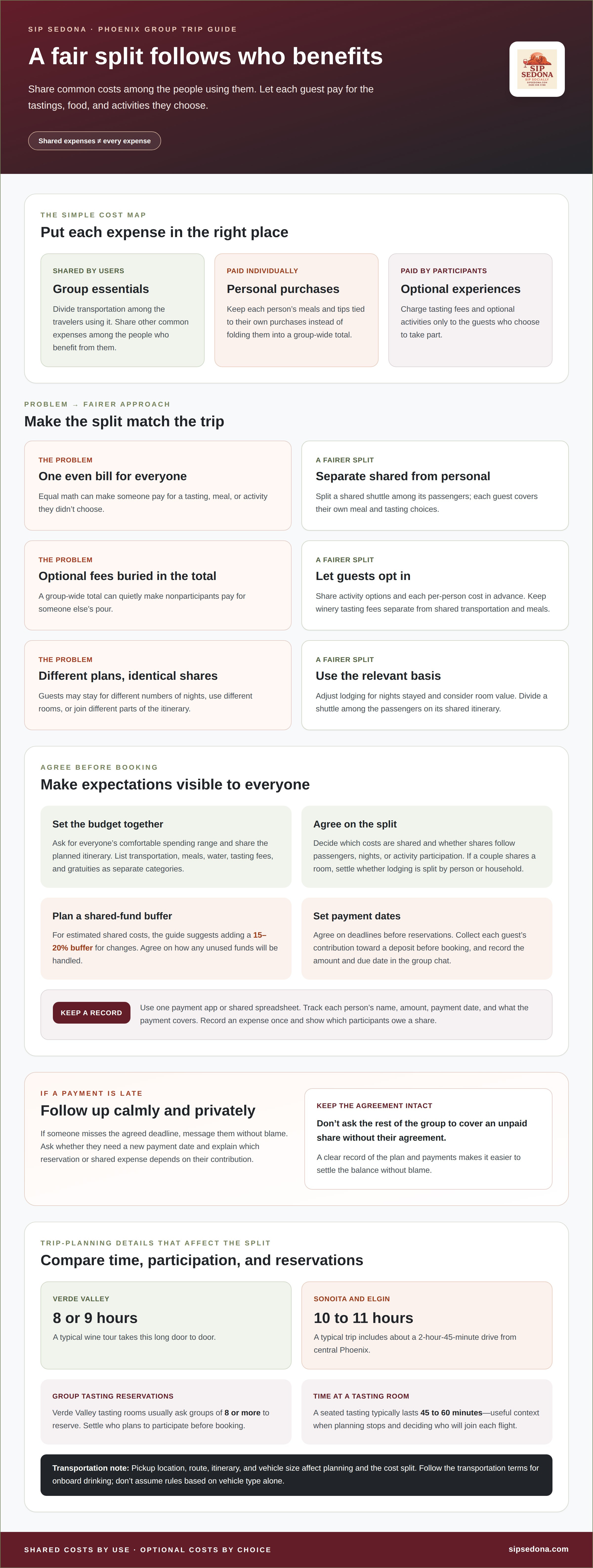
Separate shared necessities from personal choices. Divide transportation among the travelers using it, while guests pay individually for tasting fees, meals, and tips tied to their own purchases. At dinner, for example, each person can cover their meal, while a shared shuttle expense is divided among its passengers. This hybrid approach keeps everyone’s contributions connected to the value they receive.
For optional tastings, charge only the guests who choose to participate. Anyone skipping a pour shouldn’t feel pressured to pay for it. Non-drinkers can share transportation costs if they ride with the group, but tasting charges belong to the participants. Agree on this distinction before booking so shared expenses don’t come as a surprise.
Different schedules may call for different shares. If one traveler stays fewer nights, adjust their lodging contribution accordingly. If everyone rides the shuttle for the same itinerary, divide that cost among its passengers. For a room rental, the group can also account for differences in room value, such as a private suite compared with a shared room.
Don’t assume Arizona’s rules for drinking alcohol on charter buses, shuttles, or limousines based on the vehicle type alone. Keep onboard drinking separate from tasting-room purchases, and follow the transportation terms for the trip. For a Phoenix group, pickup location, route, itinerary, and vehicle size all affect transportation planning and the cost split. If one person handles reservations and payment tracking, agree beforehand on whether they’ll contribute a smaller share or take on less planning elsewhere. A clear agreement makes follow-up easier.
Have participants pay for optional activities they choose
Let each guest decide whether to join a tasting, then assign that charge only to participants. This keeps someone who skips a wine flight from paying for another person’s pour. Before booking, share the activity options and identify expenses everyone will split, such as transportation for the group riding together.
Offer options at different price points without making any one activity the expected choice. Some guests could join a tasting while others explore the town or meet the group afterward. Nobody should feel pressured to participate. Share the per-person cost of each optional activity in advance so everyone can decide comfortably before reservations are made.
Phoenix-area wineries set their own tasting fees. Charges depend on the flights or pours each guest selects, so list each winery’s fee separately from shared transportation and meals. Don’t add optional tasting fees to a group-wide total unless everyone has chosen that experience.
For a trip from Phoenix, Verde Valley is a different day plan from Sonoita and Elgin. A Verde Valley wine tour typically takes eight or nine hours door to door. A trip to Sonoita and Elgin typically takes 10 to 11 hours, including about a 2-hour-45-minute drive from central Phoenix. Compare travel time with your group’s schedule before choosing a destination.
Choose between a private tour and a group experience based on how much shared planning and flexibility your friends want. A private format lets the group shape the outing together; a group tour suits guests comfortable joining a shared itinerary. Divide a private tour’s quoted amount among the guests who opt in, rather than charging people who won’t attend.
For winery stops, favor tasting rooms that can accommodate your group’s plans. Verde Valley tasting rooms usually ask groups of eight or more to reserve, so settle participation before booking. A seated tasting typically lasts 45 to 60 minutes, useful context when planning stops and deciding which guests will join each flight.
Use one payment app or shared spreadsheet to track contributions. Record each person’s name, amount, payment date, and the activity covered. If a friend pays for a tasting reservation, enter the expense once and show which participants owe a share. Clear records make settling up easier after the outing.
3. Discuss budgets and payment expectations before booking
Before booking, ask everyone for a comfortable spending range and share the planned itinerary. One guest may welcome a full tasting schedule, while another prefers one winery and a relaxed meal. Agree on optional activities, shared expenses, and payment deadlines. Put the plan in the group chat so everyone has the same understanding.
Build the budget from actual choices, not one vague total. List transportation, meals, water, tasting fees, and gratuities as separate categories. Food and water budgets depend on the group’s meal plans and purchases; gratuities depend on the services and amounts the group chooses to tip. Keep individual purchases separate from shared costs, then show each guest how their expected contribution is calculated.
A shared fund can cover group expenses such as groceries, gas, and activities. Add a 15–20% buffer above estimated shared costs to accommodate changes, and state how any unused funds will be handled. For instance, if someone buys a meal independently, record it as their own expense rather than drawing from the common fund.
Agree on the split before booking. An equal division can suit a short, low-cost trip lasting 2–3 days, when differences are manageable. For a larger group, write down who pays for each reservation and whether shares follow passengers, nights, or activity participation. If a couple shares one room, decide whether lodging is split by person or household before collecting money.
Set payment dates alongside the budget. For a group charter, one suggested schedule is a deposit at booking and the remaining balance 7 to 10 days before pickup. Record the deposit amount each guest owes, the final due date, and who tracks payments. A shared note can also capture changes, such as someone dropping out or choosing a different tasting. Clear terms give anyone in the group a way to understand their share before commitments become difficult to change.
4. Managing deposits and reimbursements
Collect each guest’s deposit before booking shared transportation or another group reservation. This confirms who’s committed and reduces the risk of one person carrying the full cost if plans change. Set a deposit deadline and record each payment beside the guest’s name, amount, date, and purpose.
Some booking systems charge one card for the full balance. In that case, the organizer may need to pay upfront and then collect everyone’s agreed shares. Before booking, decide who will make the payment, when reimbursements are due, and what happens if a guest withdraws. Keep the agreement in the group chat to make follow-up easier.
Use a shared spreadsheet or expense app to track deposits, transportation, and other group purchases. Enter each expense once, then divide it among the guests who benefit. Mark payments as they arrive, and save receipts or booking confirmations with the record. This gives everyone a clear view of what’s been paid and what remains outstanding.
Settle shared expenses during the trip when practical, rather than leaving every calculation until everyone gets home. Aim to close the balance within two weeks after returning. If someone still owes a share, send a private, specific reminder naming the expense and agreed amount. A calm message with payment details is clearer than a general request to the whole group.
Reimbursements from friends generally aren’t taxable income to the organizer, though individual circumstances can matter. A Form 1099-K reports the total processed through a payment platform, not whether payments were reimbursements, gifts, or service payments. Keep a record showing who paid, how much, and what each payment covered, so the transaction has context if questions arise.
For a private group outing, organize the transportation plan and payment expectations before confirming the reservation. Plan your group transportation with SIP Sedona as part of a smoother day among Arizona’s wine-country stops.
SIP Sedona: Custom Group Shuttle
SIP Sedona’s Custom Group Shuttle can help when your group needs transportation shaped around its outing. It allows customized itineraries and flexible pickup times for groups of up to 14 passengers, making it a practical option for coordinating winery stops and getting everyone on the same plan.
For a more hosted wine-tasting experience, consider The SIP Tour or Private SIP Tour. The pay-as-you-go model lets guests choose and pay for the tastings and food they want, rather than treating every tasting as a shared expense. The right fit depends on whether your group wants a shuttle for its own plans or a tour experience.
Share your group’s itinerary and transportation needs with SIP Sedona to explore the best fit. Contact SIP Sedona to discuss your group outing.
Set the tone for a relaxed day together
A wine-country outing can be more than a series of reservations. It’s a chance to enjoy the drive, discover a new favorite pour, and share a relaxed afternoon beneath the Arizona sky. Let your group’s comfort and interests shape the experience, rather than pressuring everyone to visit every stop or share every expense equally.
Planning how to split costs fairly on a group wine-tasting trip in Phoenix starts with a simple goal: make the arrangement clear to everyone before the day begins. Once the group agrees on the plan, you can focus on what makes the outing yours, from the route to the pace between stops.
For help shaping the transportation or tour experience around your group, contact SIP Sedona about your trip. Here’s to good company, thoughtful planning, and a memorable Arizona sip.
Frequently Asked Questions
How Much Should Each Person Pay When Splitting the Cost?
To decide how to split costs fairly on a group wine tasting trip in Phoenix, charge each guest for shared expenses they benefit from and personal purchases they choose. For example, divide a shared ride among its passengers, while each guest pays for their own meal. If someone joins only part of the outing, assign costs according to their participation instead of automatically charging them the same as full-day guests.
Planning a wine tours trip?
Start by choosing the Arizona wine region and the kind of day your group wants. Then settle the date, pickup plan, winery stops, and guest list before anyone makes a reservation. For a group traveling from Phoenix, travel time can affect how many stops feel comfortable. Keep the route practical, with enough time to enjoy each tasting without rushing between vineyards.
What Happens If Someone in Your Group Doesn't Pay Their Share Before the Trip?
Contact the person directly to clarify whether their payment is delayed or they’re no longer joining. Those situations affect the group differently: a late contribution may leave a reservation intact, while a cancellation could change everyone’s share. Explain the relevant booking commitment calmly, then update the expense record once you’ve agreed on the next step.
What does a group wine tasting trip from Phoenix typically cost per person?
There isn’t one useful per-person total for every Phoenix wine trip because the itinerary and individual choices affect the final amount. Estimate transportation separately from tasting purchases, meals, and gratuities. Divide shared transportation among the riders, then add each person’s selected tastings and food. A shorter outing with fewer stops differs from a longer route with more purchases.
What apps or methods can track and settle shared trip expenses?
A shared expense app or spreadsheet can track contributions without relying on anyone’s memory. Include columns for the date, expense category, payer, participants, and amount owed. Save receipts alongside entries, and mark reimbursements as settled when they arrive. For example, list a winery reservation separately from transportation so guests can see which costs apply to them.
How can a group set a budget and agree on cost-sharing rules before booking?
For a Phoenix group planning how to split costs fairly on a wine tasting trip, start by asking each traveler for a comfortable spending range. Then write down which costs are shared, which remain individual, who will pay deposits, and how cancellations affect contributions. Let everyone review the plan in the group chat so the organizer isn’t making assumptions on someone else’s behalf.


