
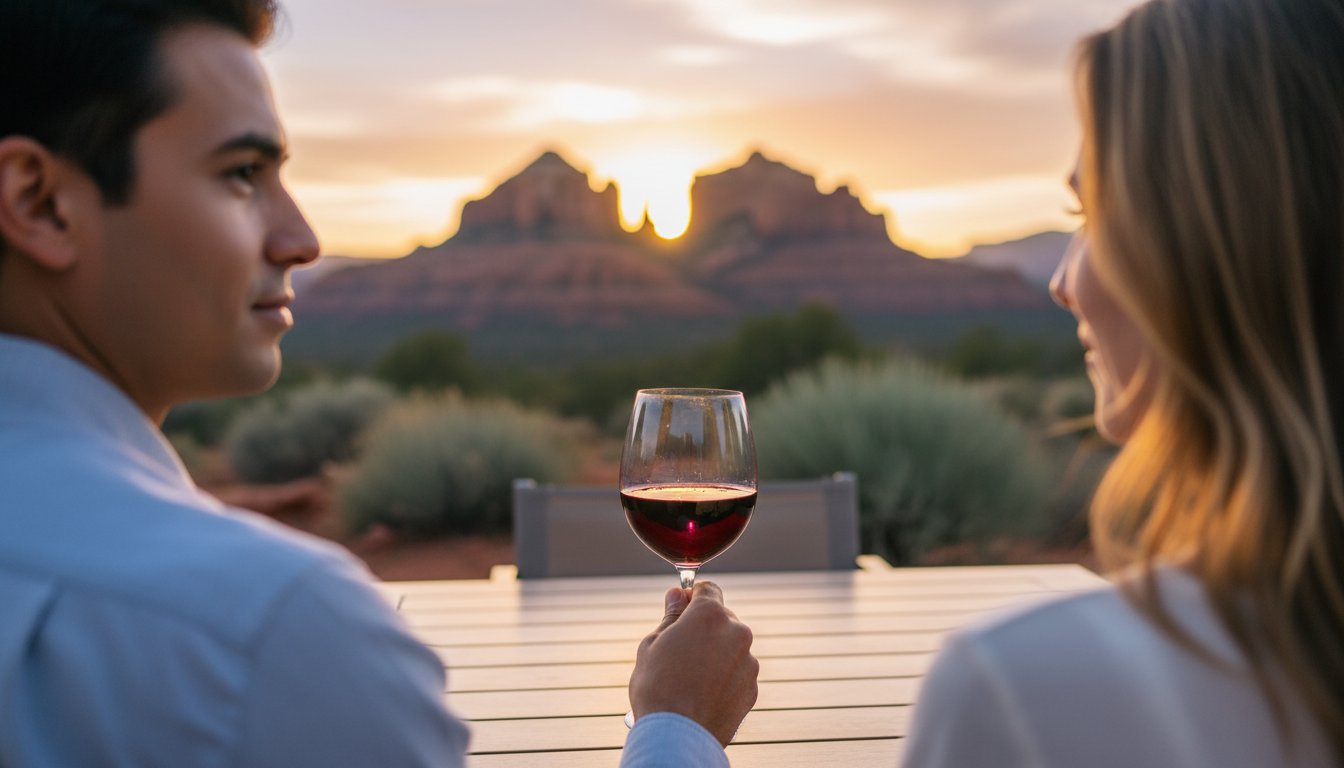
What if your evening glass of Arizona Syrah was more than just a sunset companion? You've likely felt the tug of war between conflicting medical reports and your love for a local pour. One day, a 2023 study in JAMA Network Open suggests caution, while the next, you hear about the heart-healthy Mediterranean lifestyle. It's natural to wonder, is wine good for health, especially when you're trying to balance wellness with the simple pleasure of a Sedona afternoon.
We understand that confusion. You want to savor the hand-selected craft of our region without worrying about the long term impact on your body. This guide cuts through the noise to deliver the science-backed truth about antioxidants like resveratrol. We'll provide clear guidelines for healthy consumption so you can enjoy a flight under the Arizona sun with total confidence. From the chemistry of the grape to the rhythm of the pour, we're exploring how to integrate your favorite high desert vintages into a mindful, vibrant lifestyle.
Key Takeaways
- Uncover the 2026 scientific consensus on the "French Paradox" to understand how our perspective on wine and longevity has evolved.
- Learn the science-backed answer to the question, is wine good for health, by exploring the latest research on resveratrol and heart protection.
- Navigate the delicate balance between enjoyment and risk by mastering the updated standards for mindful, moderate drinking in the high desert.
- Discover how the "Sedona State of Mind" and communal sipping can lower stress levels, drawing inspiration from the world's famous Blue Zones.
- Enhance your wellness journey by pairing world-class Arizona vintages with professional transportation for a safe, stress-free tasting experience.
Is Wine Actually Good for Your Health? Debunking the Magic Potion Myth
Settle into a comfortable chair on a sun-drenched patio and look out at the glowing Red Rocks. You likely have a glass of Arizona-grown Syrah in hand, feeling the warmth of the high desert air. For decades, we've heard that this simple ritual is more than just a way to unwind; it's supposedly a health tonic. But as we move through 2026, the scientific community has refined its stance. The question of whether is wine good for health isn't a simple yes or no anymore. It's a nuanced discussion about chemistry, lifestyle, and the joy of a well-crafted pour. Today's consensus suggests that while wine isn't a magical medicine, it can be part of a balanced life when approached with intention.
The shift from viewing wine as a "superfood" to a "complex lifestyle choice" reflects a deeper understanding of how alcohol interacts with our biology. We've moved past the era of sensationalist headlines. Instead, we embrace mindful sipping. This means prioritizing the quality of the vintage and the environment where it's enjoyed. In Phoenix and Sedona, this looks like choosing a hand-selected flight at a local tasting room rather than mindlessly pouring a mass-produced bottle at home. It's about the connection made over the glass, the stories of the soil, and the slow pace of a desert afternoon.
The French Paradox vs. The Arizona Reality
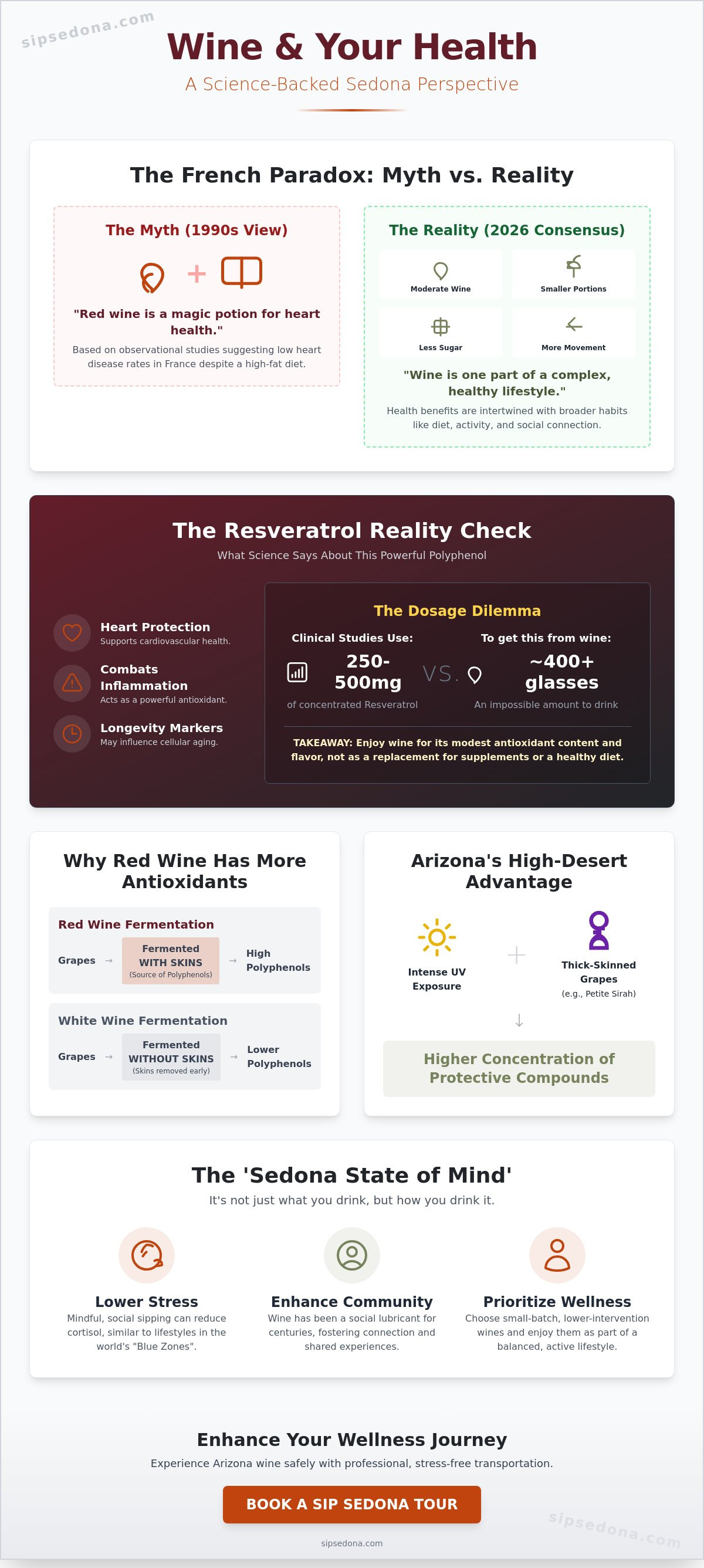
The wine-health craze arguably began in 1991. A famous 60 Minutes segment introduced the "French Paradox," the idea that French people had lower heart disease rates despite a diet high in saturated fats. They credited the red wine on their tables. This sparked a global rush to the wine aisles. However, observational studies from that era often missed the bigger picture. The French lifestyle included smaller portions, fewer processed sugars, and significantly more daily movement. When we examine the Health effects of wine today, we see that the benefits are often intertwined with these broader habits.
In the high desert of Arizona, our reality is different. We face intense heat and different hydration needs. While the Mediterranean diet relies on wine as a social lubricant for long, communal lunches, Phoenix residents often balance their love for a bold red with an active, outdoor-centric lifestyle. Understanding that is wine good for health depends on your personal biology and local environment is crucial for any enthusiast.
Why Phoenix Wine Lovers Are Seeking the Truth
The Valley of the Sun has seen a massive rise in wellness culture. From sunrise hikes on Camelback Mountain to holistic retreats in Sedona, locals are more conscious than ever about what they consume. This has led to a surge in demand for "clean" or "small-batch" Arizona wines. Enthusiasts are looking for:
- Transparency in farming practices from Willcox and Sonoita vineyards.
- Lower intervention winemaking that preserves the natural character of the grape.
- Craft pours that avoid the heavy additives found in industrial-scale production.
The Resveratrol Reality Check: What Science Says in 2026
Discover the science behind that deep ruby pour. Resveratrol is a powerful polyphenol found primarily in the skins of red grapes, acting as a natural shield against environmental stress. By 2026, clinical research has solidified its reputation for supporting heart protection, combatting systemic inflammation, and potentially influencing longevity markers. While these benefits are impressive, we have to address the dosage dilemma. Most laboratory studies use concentrated doses of 250 to 500 milligrams. To reach those levels through drinking alone, you'd need to consume hundreds of glasses in a single afternoon. Red wine remains the champion of antioxidant density because it ferments with the skins intact, unlike most white or rosé varietals that see minimal skin contact.
Polyphenols and the Arizona High Desert
Step into the Verde Valley and you'll feel the intensity of the Arizona sun. This high UV exposure is a secret weapon for local viticulture. Grapes grown in our high-altitude vineyards develop significantly thicker skins to protect themselves from the radiation. This physiological response likely increases the concentration of protective compounds within the fruit. When you experience a local tasting, you're often sipping on varietals like Petite Sirah and Mourvèdre. These thick-skinned grapes are famous for their high tannin counts and dense polyphenol profiles, offering a robust local take on the question: is wine good for health?
Heart Health: Hype vs. Evidence
The conversation around cardiovascular wellness often centers on how alcohol interacts with our internal systems. Current data helps clarify Resveratrol's benefits for heart health, particularly regarding its impact on blood vessels. The Mayo Clinic notes that certain antioxidants in red wine may help increase levels of high-density lipoprotein (HDL) cholesterol, the "good" kind that helps prevent plaque buildup. These compounds also play a role in protecting the delicate lining of the blood vessels in your heart.
Understanding the limits of these benefits is key for any conscious consumer. While resveratrol is a powerful antioxidant, its presence in a single glass of wine is a supplement, not a cure-all. It's the combination of a balanced lifestyle and the mindful enjoyment of a craft pour that truly moves the needle. When considering if is wine good for health, the evidence points toward moderation as the golden rule. A glass of Arizona-grown red offers a curated dose of nature's chemistry, best enjoyed slowly while the sun sets over the Red Rocks.
Balancing the Pour: Risks, Rewards, and the Cancer Question
Savoring a glass of Syrah under the glow of a Sedona sunset feels like pure wellness. However, we have to look at the bottle with clear eyes. When asking is wine good for health, the answer depends heavily on how you pour and what's inside the glass. Current 2026 health standards define moderate drinking as one glass for women and up to two for men. Exceeding these limits does more than just cause a foggy morning. It disrupts your REM sleep cycles and leaves you parched in the 100-degree Phoenix heat. Hydration is a non-negotiable part of the desert lifestyle. For every glass of Malvasia you enjoy, drink at least 16 ounces of water to keep your body in balance.
The MD Anderson Perspective on Cancer Risk
The conversation around alcohol has shifted toward a more cautious tone. Cancer risk remains the primary concern for health experts because ethanol is a known carcinogen. Research regarding Alcohol and Cancer Risk indicates that even small amounts can impact cell health over time. You can mitigate these risks by adopting a mindful approach to your weekly routine. Many local enthusiasts now practice "dry days," choosing to abstain from alcohol for 3 to 4 days each week. This allows the liver to rest and ensures your body stays resilient. To see how quality starts in the soil, consider booking vineyard tours. Seeing the fermentation process firsthand helps you appreciate wine as a craft rather than just a commodity.
- Prioritize Nutrition: Pair your wine with high-fiber greens and antioxidants to support cellular health.
- Watch the Clock: Finish your last pour at least 3 hours before bed to protect your sleep quality.
- Savor Slowly: Use a smaller glass to encourage slower sipping and mindful consumption.
Quality Over Quantity: Avoiding the 'Additive' Trap
Not every bottle on the grocery store shelf is created equal. Mass-produced industrial wines often contain hidden extras like Mega Purple for artificial coloring or excessive sulfites to mask inconsistent flavors. These additives can lead to the "wine headaches" that many people mistakenly blame on the grapes themselves. When you are deciding if is wine good for health, the source of the fruit matters immensely. Choosing a local winery in az often means you are supporting transparent, small-batch production. Many Arizona winemakers lean into low-intervention styles. They use native yeasts and minimal chemicals to let the high desert terroir shine. During your next tasting, ask the host about their fining and filtration methods. Selecting a clean, honest pour ensures you are drinking the best the land has to offer without the chemical baggage.
The 'Sedona State of Mind': Why Social Sipping Matters
The "Blue Zones" research, pioneered by Dan Buettner, identifies specific regions where people consistently live to 100 and beyond. In places like Sardinia, Italy, and Icaria, Greece, moderate wine consumption is a daily ritual. It isn't just about the antioxidants in the glass; it's about the communal table. When you share a bottle with neighbors, your body releases oxytocin and lowers cortisol levels. This chemical shift reduces the physiological impact of chronic stress. For those asking is wine good for health, the context of the pour matters as much as the vintage itself. Escaping the frantic traffic of Phoenix for the stillness of the Red Rocks provides a vital mental reset. The sensory act of tasting, observing the legs of a deep red or breathing in the notes of an Arizona-grown Malvasia, acts as a form of mindfulness. It grounds you in the present moment and pulls you away from digital distractions.
Combating Loneliness Through Wine Culture
Loneliness is a silent health crisis. A 2023 report from the U.S. Surgeon General likened the health risks of social isolation to smoking 15 cigarettes a day. Joining wine tasting tours sedona offers a natural remedy to this disconnect. You meet fellow enthusiasts and share a collective "halo effect." This psychological phenomenon occurs when the positive feelings of social connection enhance your perception of the experience. It turns a simple tasting into a pillar of social health. The SIP Phoenix experience focuses on this connection, ensuring that every glass is paired with conversation and community.
Mindful Hydration in the Arizona Sun
The high desert sun is beautiful, but it's also demanding on the body. Staying healthy while sipping requires intention and a bit of strategy. We recommend the "one-for-one" rule: drink eight ounces of water for every glass of wine you enjoy. The Sedona environment naturally encourages this slower, more deliberate pace. You aren't rushing to the next meeting or checking your watch; you're watching the light shift across the canyon walls. This deliberate speed helps your liver process the alcohol more efficiently and keeps your energy levels steady throughout the day. When considering is wine good for health, remember that hydration is the key that unlocks the benefits without the morning-after fog.
Ready to experience the "Sedona state of mind" for yourself? Book your next escape with Sip Sedona and discover how social connection elevates every pour.
Experience Arizona Wine Safely with The SIP Tour
Enjoying a glass of local Syrah should be a restorative experience. When you're weighing the question, is wine good for health, the context of your consumption matters just as much as the antioxidants in the bottle. Stressing over heavy traffic on the I-17 or navigating unfamiliar desert roads takes away from the relaxation that makes wine culture so beneficial. We've designed an experience that removes the logistics; this allows you to focus entirely on the craft, the scenery, and the company.
Door-to-Door Peace of Mind
Our SIP Phoenix shuttle service picks you up directly from local hotels and resorts. This door-to-door approach ensures your day starts and ends with total ease. Choosing professional transportation is the ultimate health and safety feature for any wine enthusiast. It removes the risk of driving and allows for a "zero-proof" transit experience where your only job is to soak in the views. Our local guides lead the most scenic sedona wine tours, navigating the winding paths of the Verde Valley while you watch the Red Rocks glow under the Arizona sun. You get the expertise of a seasoned connoisseur without the pressure of a map or a GPS.
Curated Itineraries for the Health-Conscious
Mindful drinking is built on the foundation of quality over quantity. We hand-select partner wineries in the Verde Valley that prioritize small-batch production and honest, local craft. This isn't about overindulgence; it's about discovery. Our pay-as-you-go model gives you complete control over your intake. You choose the specific flights, individual pours, and farm-to-table food pairings that align with your personal wellness goals. Discovering if is wine good for health becomes much easier when you're savoring a single, high-quality vintage in a serene setting.
- Access hidden gem tasting rooms that prioritize sustainable Arizona viticulture.
- Enjoy the flexibility to skip a pour or share a flight with a friend.
- Take your time to linger over a glass while breathing in the crisp high desert air.
- Benefit from the knowledge of a guide who understands the story behind every bottle.
Sip Sedona acts as your sophisticated yet down-to-earth host. We're passionate about the craft behind the glass but care more about the connection made over it. If you're ready to explore the Verde Valley without the stress of planning, we're ready to show you the way. Book your mindful wine experience today and let the Arizona landscape provide the perfect backdrop for your next favorite pour.
Find Your Balance Under the Arizona Sun
Navigating the nuances of your favorite vintage requires looking past the magic potion myths. The 2026 Global Wellness Institute report clarifies that while resveratrol levels in a standard pour remain low, the Mediterranean-style social connection offers the most significant lifestyle boost. When asking is wine good for health, remember that the "Sedona state of mind" values the quality of the experience over the quantity of the glass. It's about slow sips and the serene beauty of our high desert landscape.
We make it easy to enjoy the local craft scene responsibly. Our expert local guides share the stories behind every small-batch bottle while providing door-to-door Phoenix transportation. Our affordable pay-as-you-go model ensures you only pay for the tastings you choose, keeping your journey stress-free. Let's trade the clinical debates for a curated afternoon of relaxation and discovery.
Book your social and safe SIP Phoenix wine tour today! There is a beautiful view and a perfect pour waiting just for you.
Frequently Asked Questions
Is red wine better for you than white wine?
Red wine contains higher concentrations of polyphenols like resveratrol because it's fermented with grape skins. According to the Mayo Clinic, these antioxidants help protect the lining of blood vessels in your heart. While white wine offers some mineral benefits, the skin-contact process in red wine production provides a more robust profile for those asking is wine good for health. Savor a glass of Arizona Petite Sirah to get the most from these local skins.
How many glasses of wine per week are considered healthy?
Moderate consumption is defined by the 2020-2025 USDA Dietary Guidelines as up to seven glasses per week for women and fourteen for men. A standard pour is exactly five ounces of wine with 12% alcohol content. Sticking to these specific limits ensures you enjoy the craft without overtaxing your system. It's about finding that relaxed Sedona state of mind where quality always outweighs quantity in your glass.
Does wine help you live longer?
Research from the Blue Zones project shows that the world's longest-lived people in Sardinia drink one or two glasses of antioxidant-rich Cannonau wine daily. This habit is part of a lifestyle that includes plant-based diets and consistent physical activity. A 2004 study by Gianni Pes and Michel Poulain suggests that social connection during these pours is just as vital for longevity as the vintage itself. Sip slowly and enjoy the company.
Can wine help with heart disease prevention?
The American Heart Association reports that moderate wine consumption can increase HDL cholesterol levels by about 5% to 15%. Ethanol and polyphenols work together to prevent blood clots and reduce arterial damage. When you enjoy a local red under the Arizona sun, you're consuming compounds that help keep your cardiovascular system flexible. It's a delicious way to support your heart while taking in the view of the Red Rocks.
What are the healthiest types of wine to drink in Arizona?
High-altitude reds from the Willcox or Sonoita AVAs are your best bet because intense UV rays at 4,000 feet increase grape skin thickness and antioxidant levels. Look for thick-skinned varieties like Malbec or Tannat which have higher procyanidin counts. These hand-selected Arizona vintages offer a potent dose of desert-grown nutrients. They support a heart-healthy lifestyle while you relax on a shaded patio in the high desert air.
Does wine contain too much sugar for a healthy diet?
Most dry wines contain less than 3 grams of residual sugar per liter, making them a keto-friendly choice for health-conscious drinkers. During the fermentation of a craft Arizona Syrah, yeast consumes nearly all the natural grape sugars to create alcohol. You'll find that a standard five-ounce pour of dry wine typically has less than 1 gram of sugar. It won't spike your insulin levels like a sugary cocktail or soda would.
Is it safe to go on a wine tour if I'm watching my health?
Going on a wine tour is a healthy way to explore the Verde Valley if you balance your tastings with hydration and movement. Plan to drink 8 ounces of water for every 2-ounce tasting pour to stay hydrated in the dry Arizona heat. Many Sedona tours include walking between tasting rooms; this helps you reach the 10,000 steps recommended by health experts while enjoying the local scenery.
What happens to your body if you drink wine every day?
Drinking wine every day within recommended limits can support heart health, but exceeding 14 drinks per week for men or 7 for women increases risks of liver disease. A 2018 study in The Lancet indicates that heavy daily consumption disrupts REM sleep and can lead to weight gain. To keep your Sedona state of mind authentic, focus on savoring a single, high-quality pour. It's about the connection, not the volume.


