

What if the team-building experience begins before anyone reaches the retreat venue? A thoughtful sedona corporate retreat transportation plan turns the ride between lodging, meetings, and activities into part of the getaway, rather than another logistics puzzle. Coordinating pickups and keeping everyone on schedule takes planning, especially when the itinerary includes several stops. Clear instructions help the group settle in and enjoy the red-rock scenery along the way.
Look beyond getting from point A to point B. A shared transportation plan can keep the team together, make transitions easier, and reduce the day-of coordination that falls to the organizer. SIP Sedona provides group transportation, custom itineraries, and flexible routes built around retreat plans.
This guide covers how to map pickup and drop-off points, match transportation to your schedule, and compare point-to-point trips with dedicated group transportation. You’ll also find ways to connect lodging with meetings, outdoor activities, or an optional craft beverage stop. Plan the essential details ahead, then leave room to relax into the Sedona pace.
Key Takeaways
- Choose a transportation format based on how often the group needs to move and whether everyone can depart together.
- Plan the day around arrival, core sessions, shared activities, and return transfers, with breathing room between stops.
- Put group size, lodging locations, retreat dates, stops, arrival windows, and departure points in one itinerary.
- Thoughtful sedona corporate retreat transportation planning makes transitions a smoother part of the team getaway.
- A custom route can connect lodging with planned activities, while professional transportation helps the organizer focus on the event.
Why Sedona corporate retreat transportation shapes the whole team experience
A retreat itinerary is more than a list of meetings and activities. It’s a sequence of shared moments, from gathering at the lodging to arriving at a planning session, heading to a group activity, and returning together at day’s end. Sedona corporate retreat transportation means coordinating those trips around the agenda, with a clear departure point and a plan for how the group moves between stops.
That coordination affects the retreat’s pace. If each attendee drives separately, the organizer may need to track different arrival times, answer parking questions, and account for people reaching the next stop at different moments. A shared ride gives everyone a common departure plan and brings the group together for each leg. Less time managing separate arrivals means more attention for the purpose of the getaway.
Clear pickup plans make retreat transitions smoother by giving everyone the same place, time, and next stop. Transportation supports the agenda; it doesn’t decide what belongs on it. Organizers choose the meetings, meals, outdoor experiences, or optional craft beverage stops, then arrange group travel to connect those plans.
What makes retreat transportation different from a business ride?
A single business transfer has one destination. A retreat may involve several stops, with the group leaving lodging together, gathering at a venue, and moving on to a planned activity. Shared departure times and specific meeting points tell attendees where to be and when, while reducing the need for the organizer to manage separate arrivals throughout the day.
For example, an organizer might set one pickup point at the lodging, a shared departure for the day’s first session, and a return point after the final activity. The right arrangement depends on the itinerary. A custom group route can connect those planned stops without requiring the organizer to create a separate driving plan for every attendee.
Why Sedona’s setting calls for a considered group plan
In Sedona and the Verde Valley, retreat lodging, gathering spaces, and activities may be in different locations. Map the stops your agenda actually includes, then decide where everyone should meet before each departure. The Sedona, Arizona Wikipedia page offers background on the area’s geography and attractions as you shape the experience.
The high-desert scenery is part of Sedona’s appeal. Red-rock views can make the ride a welcome pause between sessions, but the landscape doesn’t replace practical planning. Each leg still needs a clear pickup point, a shared departure plan, and enough time for people to gather. With those basics in place, the team can travel together and enjoy the setting without rushing through it.
- Start with the agenda: Identify which transitions require the whole group to move together.
- Name the meeting points: Share a specific pickup and drop-off location for each planned leg.
- Let the team choose the activities: Arrange transportation around the retreat plans, not the other way around.
Compare Sedona corporate retreat transportation options by itinerary
The best transportation format depends on how the retreat moves. Does the team need one direct transfer, several stops in a planned sequence, or repeated trips between the same locations? Match the format to the agenda so attendees know when and where to gather and the organizer has a practical way to coordinate each transition.
| Format | Number of stops | Shared departure needs | Schedule flexibility |
|---|---|---|---|
| Point-to-point transfer | One defined trip between pickup and destination | Works best when the group is ready to leave together | Best for a straightforward transfer with set locations |
| Dedicated group shuttle with a custom route | Multiple planned stops | Can coordinate departures around the group’s itinerary | Adapted to the planned sequence of retreat activities |
| Recurring event loop | Repeats the same set of locations | Useful when guests need more than one departure window | Follows a regular circuit rather than a changing itinerary |
Use the table as a starting point, then compare the options with the full schedule. For broader event-shuttle planning considerations, the Phoenix wedding and event transportation planning guide offers another perspective on organizing group movement.
When point-to-point group transfers fit the agenda
Choose a point-to-point format when the main transportation need is clear, such as moving the team from its lodging to one primary gathering location. Defined pickup and drop-off points make instructions easy to share: attendees know where to meet, and the organizer has one departure to coordinate. If the agenda includes several stops or transitions, a more flexible route may fit better.
When a custom shuttle route or loop makes more sense
A custom route can connect several retreat locations in the order they appear on the agenda. This works when the day moves from lodging to a session venue, then to a shared activity, with a return transfer afterward. A recurring loop serves a different purpose: it repeats between set locations for groups that need regular trips. Choose based on how the group will move, not just the vehicle label.
For example, a team gathering at one venue for the day may need a single arrival and return transfer. If attendees will travel between lodging and several activities, a custom route can follow that sequence. If people need repeated rides between the same fixed points, a loop may be a better fit. Keep departure instructions simple and allow time for the group to gather before each ride.
For retreat planners who want one shared itinerary, a custom group shuttle in Sedona can connect planned stops through a tailored route. SIP Sedona offers professional shuttle services and flexible routing to align group transportation with the schedule, leaving the organizer focused on the team experience.
Build a Sedona retreat itinerary that keeps the group together
A strong retreat itinerary treats transportation as part of the agenda, not a detail to fill in later. Start with where the group is staying, identify pickup points, then place sessions and shared activities in the order they’ll happen. For sedona corporate retreat transportation, make each transition easy to understand and realistic to carry out, without squeezing every moment onto the clock.
Sketch the day in four blocks:
- Arrival: Set the lodging pickup location and the group’s first destination.
- Core sessions: Note which departures need the whole team and which activities take place at one location.
- Shared activities: Add each planned outing in agenda order, with time for the experience itself.
- Return transfers: Set the final pickup and drop-off points, including where the group’s shared schedule ends.
Build breathing room around each transition. Attendees may need time to gather before departure, and the schedule should allow them to board and settle in at the next stop. Share the intended sequence of stops with the transportation planner so the route can be aligned with the day’s plans. Keep pickup instructions consistent in the itinerary and in attendee messages.
Sequence pickups, sessions, and group activities
Mark each agenda item as either group movement or independent time. If everyone needs to arrive together for a session, show one departure point and a clear gathering time. If free time begins after an activity, state when the shared transportation plan resumes and where the group should meet. Designate one organizer as the day-of point person for transport updates, so attendees aren’t sorting through conflicting instructions.
A useful working itinerary lists the pickup location, destination, planned arrival window, and next departure point for every leg. This format helps the organizer spot a tight transition before sharing the schedule and gives transportation a clear sequence to follow. Once the details are set, send the same version to the team and direct updates through the designated point person.
Add a Verde Valley experience without derailing the agenda
A winery visit or craft beverage stop can make a relaxed team activity when it’s one part of the retreat rather than the day’s entire focus. Allow time for the stop itself, not only the ride there and back, and place it where it won’t compress a core session or the return plan. The Sedona wine tour guide and Verde Valley Wine Trail guide offer destination context as you consider an optional tasting outing.
Keep the activity choice and transportation plan distinct: the group’s route supports the agenda, while the organizer sets the experience and handles its arrangements. SIP Sedona’s custom group shuttle can follow planned retreat stops, with professional transportation helping the team travel together. A custom group shuttle route can give the day a thoughtful rhythm, from the first pickup to the last shared transfer.
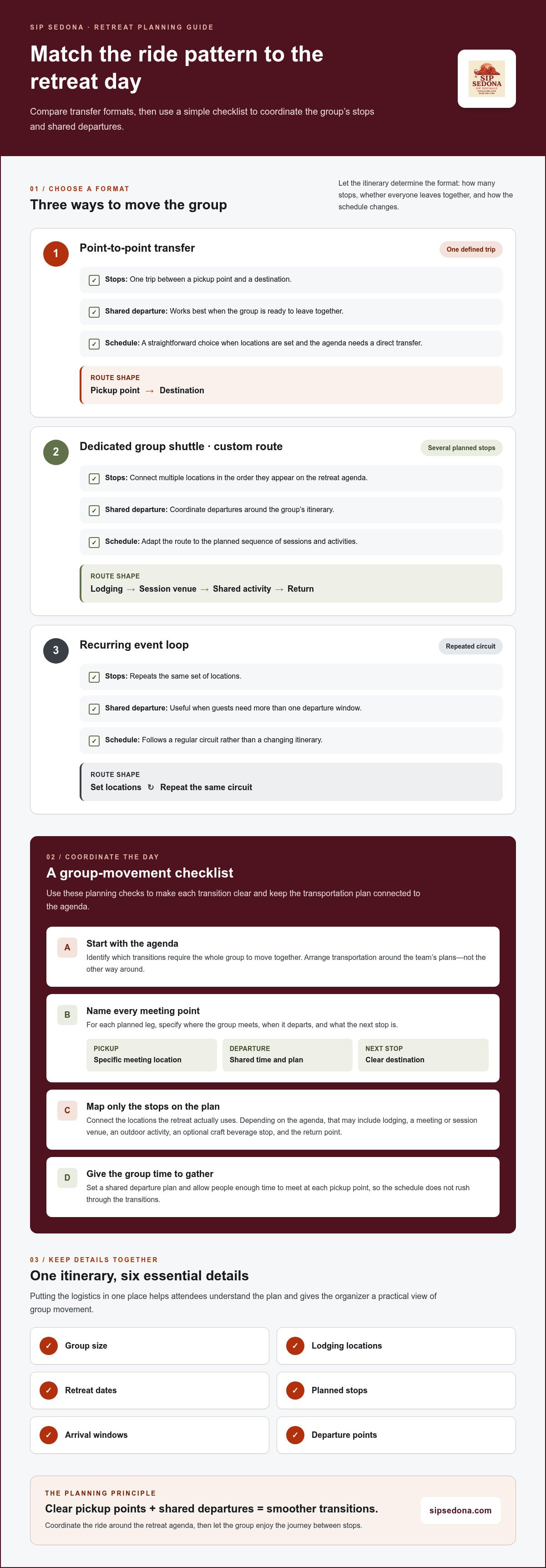
Plan corporate retreat transportation in Sedona with this checklist
A little preparation makes the transportation plan easier to share and simpler to manage on retreat day. Before arranging group travel, gather the details that shape the route and schedule. Keep them in one itinerary that the organizer and transportation partner can use to coordinate pickups, stops, and departures.
Information to gather before arranging group transportation
Start with the essentials, then add each movement the retreat requires. This creates a useful draft route without locking the agenda into a rigid sequence too early.
- Set the expected headcount. Note the planned group size and identify anyone joining from a separate pickup location.
- List lodging locations. Record where attendees are staying and which locations should be pickup or drop-off points.
- Add the retreat dates. Use the correct dates across the transportation plan, itinerary, and attendee updates.
- Map every planned stop. Include meeting spaces, shared activities, and the final destination for each transportation leg.
- Add preferred arrival windows. Show when the group should reach each location, not just when it should leave.
- Mark departure points. Record where the group gathers before each ride, especially if the pickup location changes during the day.
- Separate fixed times from flexible periods. Flag sessions or activities with set start times, then distinguish them from open social time that can move within the schedule.
- Review the route as one itinerary. Check that every stop has a clear arrival window, next departure point, and connection to the retreat agenda.
This working document is the foundation for sedona corporate retreat transportation that follows the group’s actual plans. It can also expose scheduling gaps early, such as a stop without a stated pickup point or a fixed session without an arrival window. A custom itinerary and flexible routing can connect lodging, gathering spaces, and activities across Sedona and the Verde Valley.
How to make day-of coordination feel simple
Once the route is organized, make attendee instructions easy to scan. Share the pickup location, departure time, next destination, and the name of the organizer handling transport updates. Use one point person and one update channel so changes don’t get scattered across separate messages or passed along inconsistently.
If the agenda changes, update the itinerary and send the revised version through that same channel. Keep the transportation plan aligned with the latest schedule, and make any changed meeting point especially clear. State the new pickup location directly rather than expecting attendees to infer it from a changed destination. Professional transportation and a custom route can support the group’s movement while the organizer stays focused on the retreat.
Ready to shape your retreat route around the agenda? Explore SIP Sedona group transportation for a coordinated way to connect planned stops.
Choose SIP Sedona for a more connected retreat experience
A retreat feels more relaxed when the team’s transportation follows the same thoughtful plan as its sessions and activities. SIP Sedona is a locally owned transportation partner for Sedona and the Verde Valley, offering professional shuttle services, group transportation, custom itineraries, and flexible routes. Organizers can plan around how the group needs to move instead of piecing together separate rides for every stop.
A shared approach helps across a full retreat schedule. One route can connect lodging with gathering spaces and planned activities, while the organizer keeps the agenda, attendee instructions, and pickup details in view. The goal isn’t to fill every moment with a transfer. It’s to give the group a coordinated way to move between the moments that matter.
What retreat planners gain from a local transportation partner
Planning group movement in Sedona and the Verde Valley starts with the locations your retreat actually uses. SIP Sedona can shape a custom route around those stops and the schedule you’ve planned. With professional shuttle service and one coordinated group plan, attendees can travel together while the organizer spends less time managing individual arrivals and more time welcoming the team.
This support is useful when an itinerary includes different kinds of gatherings, such as a meeting space followed by an outdoor activity or an optional craft beverage stop. The organizer chooses which experiences belong in the retreat; transportation connects them. Keeping those roles clear helps the schedule stay practical without making the ride itself the focus.
Turn the retreat plan into a transportation plan
Bring the agenda and transportation details together before the retreat begins. A useful planning brief can include:
- Group needs: Expected headcount and any separate pickup locations.
- Key locations: Lodging, meeting spaces, planned activities, and final drop-off points.
- Schedule priorities: Fixed session start times, preferred arrival windows, and flexible periods.
- Shared movements: The departures when the team needs to travel together.
With those details in hand, SIP Sedona can tailor a custom group shuttle route to the retreat itinerary. The route follows planned activities, and professional shuttle service helps the group move through the day together. That gives the organizer a clear transportation framework and leaves more room for the team to settle into the high-desert setting.
Ready to bring the agenda, pickup locations, and group needs into one plan? Plan Sedona group transportation with SIP Sedona and start shaping a coordinated retreat experience.
Set your retreat in motion
A well-planned getaway gives your team more than a change of scenery. It creates space to step away from daily routines, reconnect, and return with fresh perspective. In Sedona, the high-desert landscape can help set a relaxed tone, but that feeling starts with how thoughtfully the experience is put together. Let sedona corporate retreat transportation support the kind of retreat you want your team to remember.
As you move from ideas to arrangements, focus on what you want people to take away: a calm arrival, an easy shift from work to shared time, or room to enjoy the Red Rocks between activities. Those intentions can guide the final planning choices and help the schedule feel purposeful without feeling packed.
Ready to take the next step? Plan your Sedona retreat transportation with SIP Sedona and start shaping a getaway your team can enjoy together. Here’s to a smooth journey and a memorable time in the high desert.
Frequently Asked Questions
Can a Sedona corporate retreat shuttle include multiple stops?
Yes. Sedona corporate retreat transportation can follow a planned group route connecting several locations, and SIP Sedona offers custom itineraries and flexible routes for group transportation. Put stops in agenda order, noting which destinations are essential and which are optional, then share them as one coordinated plan. This gives everyone the same picture of the day and helps align pickups with the retreat sequence.
How far in advance should I plan transportation for a corporate retreat in Sedona?
Begin planning once your retreat dates, expected headcount, lodging, and core agenda are taking shape. For Phoenix-based teams organizing a Sedona retreat, an early draft gives you time to map how the group will move from arrival through lodging and scheduled activities. You don’t need every detail finalized to start organizing the route. Refine the itinerary as locations and agenda points become clear, then share the updated plan with attendees.
What information should I give a shuttle service for a company retreat?
Prepare the details that shape where and when the group travels: retreat dates, expected attendance, lodging addresses, pickup locations, planned destinations, and fixed session or arrival times. Flag anyone joining from a separate location and include the final drop-off point. These details help tailor transportation to the retreat’s actual movements rather than a generic route. Focus on travel-related information, not unrelated meeting notes or private attendee details.
Can a Sedona retreat itinerary include a wine tasting stop?
Yes. A wine tasting can be one stop within a broader retreat outing, with group transportation coordinated around the visit and the rest of the schedule. Leave time for the tasting experience itself rather than treating the drive as the whole activity. Shuttle service covers transportation, not tasting fees or meals. For destination ideas, browse SIP Sedona’s Sedona wine tour guide.
What is the difference between a shuttle loop and a custom group route?
A loop repeats travel between established locations, which can suit a retreat where attendees need recurring transfers, such as between lodging and a venue. A custom group route is arranged around the group’s planned stops and schedule, so its order can follow the day’s activities. In short, a loop serves repeated circuits; a custom route follows the itinerary from one planned stop to the next.
How can we keep retreat attendees informed about pickup details?
Send one itinerary before arrival with each pickup point, departure time, destination, and the organizer’s contact details. Choose one channel for updates, such as the event’s shared email thread, and tell attendees where to look if instructions change. Keep each update specific: state what changed and name the revised meeting point. Clear, consistent details help guests gather with confidence, though they can’t prevent every schedule adjustment.


