

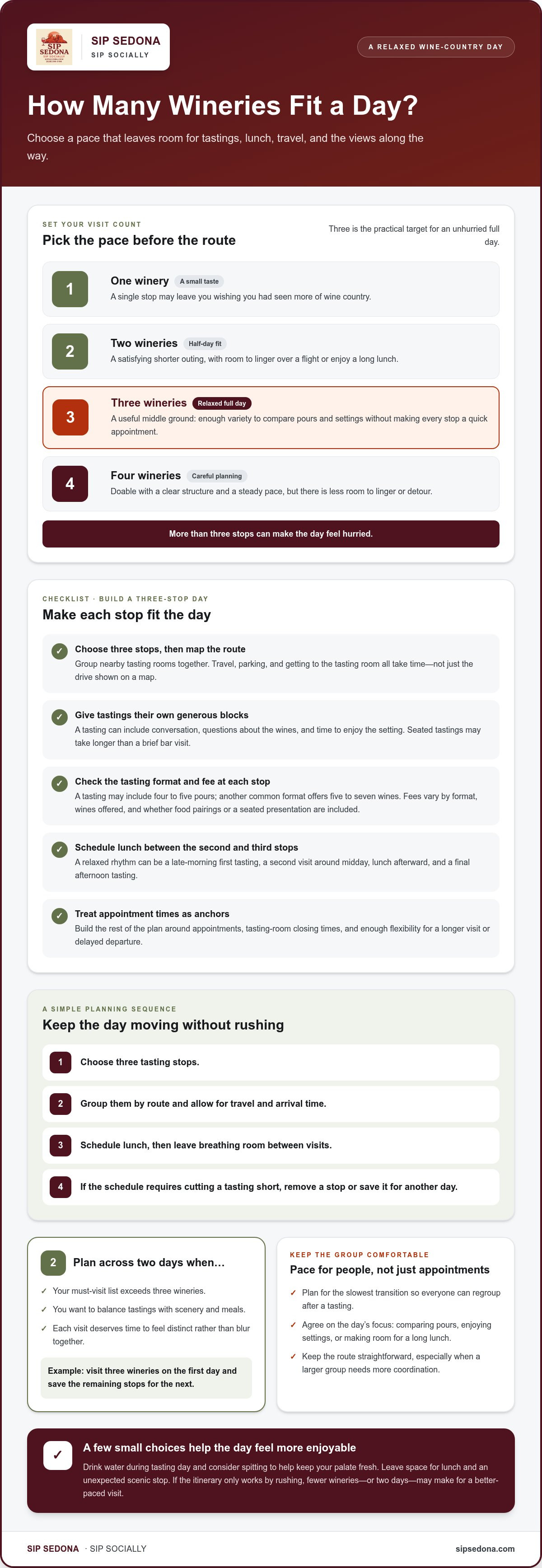
Three wineries make a better day than a crowded checklist. If you’re wondering how many wineries you can visit in a day without rushing, three is a relaxed target; four can work with careful planning, but more than three may make the day feel hurried. Two wineries suit a half-day outing, while one may feel like too small a taste of wine country.
It’s tempting to fit every tasting room into one itinerary, especially when you’re excited to discover new pours. But tastings take time, as do lunch, travel, and an unplanned stop at a view you’ll remember. This guide will help you pace visits around your group, tasting time, meals, and room for spontaneous detours. You’ll also learn when a fuller schedule makes sense and when spreading plans over two days lets you savor the experience instead of watching the clock.
Key Takeaways
- Plan around the time each tasting takes, the drive between stops, and when tasting rooms close, not just the distance on a map.
- Give your group breathing room between visits; transitions, different interests, and a slower pace can all shape the day.
- Keep lunch and scenic detours in the itinerary so they feel like part of the experience, not interruptions.
- Drink water and consider spitting during tastings to help your palate stay fresh and make it easier to notice each wine.
- If your must-visit list feels crowded, spread the experience across two days instead of turning every stop into a quick pour.
1. Is it better to split wineries over two days?
If you’re asking how many wineries you can visit in a day, three is a practical target for a relaxed full-day outing. More than three can make the day feel hurried, while four is doable with careful planning. The right number depends on whether you want time to enjoy each stop or simply fit more into the itinerary.
One winery can feel like a small taste of wine country, leaving visitors wishing they had seen more. Two visits make a satisfying half-day outing, especially if you want to linger over each flight or enjoy a long lunch. For a full day, three visits offer a useful middle ground: enough variety to compare settings and pours without turning every stop into a quick appointment.
Start with three wineries when planning a day, then map the route and decide how long you want to spend at each stop. A tasting can include conversation, questions about the wines, and time to enjoy the setting. Add the drive between stops and a meal, and a short list can fill the day naturally. Four or more stops leave less room for those moments.
Four winery visits can work if the day has a clear structure. Group nearby stops, set realistic arrival times, and decide which visit matters most. Leave enough flexibility for a longer tasting or delayed departure. This suits visitors comfortable with a steady pace. If your priority is an unhurried afternoon, three visits are a better fit than squeezing in a fourth.
Split the itinerary over two days if your must-visit list exceeds three wineries, or if you want to balance tastings with scenery and meals. For example, plan three stops on the first day and save the remaining wineries for the next. Each visit then has room to feel distinct instead of blurring together in a rush. You can also choose a different route or pace on day two.
Choose two visits for a half-day, three for a relaxed full day, and four only when careful planning suits your group. Drink water during a tasting day, and leave room between visits for lunch or an unexpected stop. For Phoenix-area travelers heading to wine country, the best schedule fits your route and gives you time to enjoy each pour. If the list feels crowded, two days may be more rewarding.
2. Taking time to enjoy tastings and winery settings
A tasting is more than a quick pour. A typical winery tasting includes four to five pours, while another common format offers five to seven wines. Leave time to hear how the wines differ, ask about a vintage, and enjoy the view. A seated tasting can take longer than a brief bar visit, especially when the host shares details about each selection.
There isn’t one typical winery tasting fee across the United States. Fees vary by tasting format, wines offered, and whether the experience includes food pairings or a seated presentation. Review each stop’s format and account for its fee instead of assuming every tasting costs the same.
Travel time depends on the distance between wineries, the route, and traffic. For a Phoenix-based day trip, choose a destination area first, then group nearby tasting rooms together. Allow time for parking and getting to the tasting room, not just for the drive. Stops spread across separate areas can let travel dominate the day.
In the Sedona and Verde Valley region, plan around the specific tasting locations you want to visit. A day focused on wineries may feel different from one that includes tasting rooms in a town center. Keep the route compact, and decide whether you’d rather spend time at a winery or move between several tasting locations. That choice helps shape a realistic schedule.
For three tastings, give each visit its own generous block, then plan lunch between the second and third stops. A relaxed rhythm might be a late-morning first tasting, a second visit around midday, lunch afterward, and a final tasting in the afternoon. Keep the itinerary in one area so driving doesn’t cut into time at the table.
Use appointment times as anchors, not as a reason to rush every other stop. If a winery offers a seated tasting, leave room for conversation and the setting. Build the rest of the plan around the appointment, with enough flexibility for a longer visit. That breathing room matters when a group wants to compare notes or linger over a favorite pour.
Keep the day grounded with a simple planning sequence: choose three tasting stops, group them by route, schedule lunch, then allow for travel and arrival time. If the schedule only works by cutting a tasting short, remove a stop or save it for another day. The goal is to remember the wines and landscape, not just how many tasting rooms you reached.
3. How group size and type affect pacing
A tasting itinerary moves at the group’s pace, not just the driver’s. Two friends may quickly agree on a flight or when to leave. A family gathering may want more time for photos, questions, and comparing favorites. Plan for the slowest transition, such as gathering everyone after a tasting, instead of assuming everyone will be ready at once.
Different interests also shape the schedule. One guest may want to discuss wine styles, while another prefers the patio and scenery. Before choosing Phoenix-area stops, agree on the day’s focus: comparing pours, enjoying distinctive settings, or making room for a long lunch. A shared priority helps prevent one person’s must-see list from rushing the whole group.
The tasting-room experience can change with the party. A couple can settle into a small table easily, while a larger group may need more coordination when ordering, listening to a host, and paying. Keep the route straightforward, and agree on priorities before arrival. One person can track the next appointment and help everyone regroup before departure.
Transportation also affects how smoothly a group moves between stops in the Sedona and Verde Valley area. Navigating, parking, and coordinating several vehicles can take attention away from the tasting experience. A Custom Group Shuttle allows customized itineraries and flexible pickup times for groups of up to 14 passengers. That option can suit a party that wants to follow one route together.
Match the itinerary to the occasion. Wine enthusiasts might prefer fewer stops, with time to ask questions and compare notes. A celebration group may care more about scenery and shared time between visits. For a Phoenix gathering traveling to wine country, agree on the pace before selecting stops. A route that suits the occasion makes transitions easier.
Different energy levels matter, too. Some guests may want to linger after a tasting, while others are ready to move on. Build in a pause for everyone to regroup, drink water, and share impressions. Agreeing where to meet after each visit keeps the group connected without requiring everyone to move at exactly the same speed.
Before setting the route, choose one person to coordinate appointments and communicate what comes next. Share the itinerary, including pickup and regrouping points. Then confirm that the stops reflect the group’s shared interests. Much like professional tour planners such as BELUNE do when coordinating group travel, a little coordination beforehand leaves more attention for the wines, high-desert scenery, and company along the way.
4. Leaving room for spontaneous stops and lunch
A tasting itinerary needs open space, not just appointment times. Leave a flexible block between visits for a longer conversation, an appealing view, or a stop that catches the group’s eye. If a winery setting invites you to linger, enjoy it rather than watching the clock for the next tightly packed reservation.
Give lunch its own place in the plan. A leisurely meal, such as a picnic overlooking the vines, can become a highlight instead of a rushed pause between pours. Choose a lunch plan before the day begins, then leave enough time to sit, eat, and reset. Food costs are separate from tasting fees, so include them in your budget.
Build the route around a natural lunch point. If the first tasting runs longer than expected, a nearby meal can keep the rest of the day from feeling compressed. If lunch comes before the final tasting, give the group time to enjoy it instead of turning the meal into a quick refueling stop. The best placement depends on the route and the group’s appetite.
Use a simple planning sequence: choose the essential wineries, map the route, then mark a lunch window. Add optional stops only if they don’t cut into time at a booked tasting. This makes spontaneous choices easier. A scenic pause can replace an optional stop, while a must-visit winery stays protected in the schedule.
For a Phoenix-area outing, consider how the drive will shape lunch and detour choices. A stop farther from the planned route may add more travel than time at the winery. Keep the day’s key wineries grouped together, and leave nearby alternatives open for an unexpected change of pace. That way, a pleasant discovery won’t force the group to hurry through its next tasting.
Plan for hydration, too. Keep water accessible during travel and take a pause between tastings to drink it. This simple routine helps the group stay comfortable as the day unfolds. Pair a water break with lunch or a scenic pause so it’s easy to remember without adding another appointment.
Before leaving, agree on what can move and what cannot. Keep a reserved tasting fixed, for example, but treat a scenic detour as optional. If lunch runs long, drop the extra stop rather than cutting the meal short. One or two flexible choices let the day feel spontaneous while keeping important plans intact.
Allow flexible travel time based on the route, and keep the key wineries grouped together. A stop farther from the planned route can add more travel time than the visit itself.
5. Spitting wine and palate fatigue
By the fourth or fifth winery, tasters may find that the differences between wines start to blur. Several flights in one day can bring palate fatigue, making each new pour harder to distinguish. Spitting during a tasting lets you assess wine without swallowing every sample. It’s a useful option when you want to focus on aromas, texture, and finish across multiple stops.
A tasting may include four to five pours, or five to seven wines, so the samples add up. By the third winery, visitors may have tasted close to twenty wines. That’s a lot of flavor notes to remember, especially when styles vary. Pause between pours, drink water, and jot down a few words about each favorite. Simple notes can help you recall what stood out.
Spitting is normal in wine tasting. When comparing several wines, use the spit bucket if available, particularly for pours you don’t want to finish. Visitors who don’t spit may consume about a glass or two at each tasting room. That can affect how comfortable and alert you feel as the day continues, so plan your tasting choices deliberately.
Driving changes the itinerary because someone needs to stay responsible for the journey. If you’re driving yourself, designate a driver who avoids alcohol; other members of the group can taste. Alternatively, arrange transportation before the first pour. That choice can shape which wineries you visit and how the group travels between stops.
Keep the tasting plan manageable. Choose a smaller number of meaningful pours at each winery, and don’t treat every listed wine as a must-try. At a third stop, for example, focus on a style you haven’t sampled yet rather than repeating similar selections. Spitting, water, and short breaks can help preserve your attention, but they don’t replace a thoughtful transportation plan.
For a group outing, agree on the driving plan before setting the route. A designated driver can enjoy the scenery and company without tasting wine. If nobody wants that role, arrange professional transportation—much like booking Comfort Car Service for scenic mountain excursions—so everyone can participate in tastings without driving afterward. Plan for the full route, not only the trip between the first two wineries.
Want everyone to enjoy the tastings without taking turns behind the wheel? Arrange group transportation as part of your wine-country plan, then keep the day focused on the wines, views, and time together.
SIP Sedona: The SIP Tour
SIP Sedona can simplify winery-day logistics when driving or group coordination would distract from the experience. Choose the Private SIP Tour for a private outing, or the Custom Group Shuttle when your group needs transportation for its itinerary. Either option lets guests focus on tastings, scenery, and time together instead of managing every drive between stops.
For a wedding or another event, Wedding & Event Transportation can bring transport into the wider plan. These options suit different occasions, from a private wine-country day to a group celebration. Winery tastings, lunch, and food are separate itinerary expenses.
Contact SIP Sedona to discuss transportation for your winery outing.
Make Your Sedona Wine Day Your Own
The question of how many wineries you can visit in a day is a helpful starting point, but the day is yours to shape. Think about what you want to remember: a tasting that sparks conversation, a view worth lingering over, or time shared with your favorite people. Let those priorities guide the route instead of treating every stop as a box to check.
For a wine-country outing, The SIP Tour offers one way to enjoy the experience, while the Private SIP Tour suits guests seeking a private outing. Groups planning their own route can consider a Custom Group Shuttle for transportation between stops. Choose the approach that gives you more room to enjoy the Arizona landscape and less to manage along the way.
Ready to start shaping your Sedona outing? Contact SIP Sedona to plan your visit. Here’s to an easygoing day, memorable pours, and a little more time to savor the view.
Frequently Asked Questions
Is it better to split wineries over two days?
Yes, splitting visits over two days can make sense when you want distinct experiences without rushing between them. For example, devote one day to winery tastings and another to exploring tasting rooms or enjoying the surrounding scenery. This can also help if your group has different priorities, such as a longer lunch or stops based on wine styles. Build each day around one main theme.
How long does a typical winery tasting visit take?
A visit’s length depends on its format, the number of wines presented, and how much time you spend talking with the host. A seated tasting with guided explanations naturally takes longer than sampling at a counter. Add time to arrive, settle in, and enjoy the setting before leaving. Treat the tasting as an experience with several parts, not just the time spent pouring wine.
Do wineries require reservations for tastings?
Reservation policies vary by winery and tasting format. Some tasting rooms welcome walk-ins, while seated tastings or hosted experiences may use appointment times. For a group, reservations can help keep everyone together and make the day’s sequence easier to manage. Plan around any set appointment, then leave open time before and after it so a late arrival or longer conversation doesn’t disrupt the rest of your plans.
What is a good winery itinerary for one day?
A good itinerary starts with one wine-country area, not stops scattered across a wide route. For a Phoenix-area outing, choose a destination cluster, arrange transportation, and anchor the plan with your preferred tasting appointment. Add a meal and a scenic pause, then keep any extra stop optional. This gives the group a clear plan and room to adjust if a tasting, lunch, or view deserves more time.
Are there winery tour or transportation options that allow more stops in one day?
Yes. The SIP Tour includes round-trip transportation from local lodging and an itinerary featuring selected wineries or tasting rooms. Its listed experiences cover 2-7 stops, depending on the tour, so the route can accommodate different day plans. For a private outing, the Private SIP Tour offers a private-tour upgrade. Groups planning their own route can also consider a Custom Group Shuttle, keeping transportation organized between tastings.
How much travel time should you allow between wineries?
Allow 10-20 minutes between wineries in the Verde Valley and Sedona wine region, or 15-30 minutes when moving between different local tasting clusters. Also leave time for parking and reaching the tasting room.


